 Phone:
 E-mail:


The core task of fire-fighting robots is to replace or assist firefighters in entering high-risk environments, performing critical operations such as reconnaissance, search and rescue, and fire suppression, in order to reduce the risk of casualties. However, at present, robots still face many difficulties and challenges in application, including but not limited to the following problems regarding the application of robots in terms of crawler chassis performance:
· Mobility and terrain adaptability: The equipment is too heavy to be easily moved, or it is too large to pass through narrow passages. The tracked structure has poor adaptability in complex terrains such as stairs and ruins.
· Range and load capacity: The battery has limited range, and the load capacity is insufficient (for example, the robot dog can only extinguish small fires at the initial stage), and the mobility further decreases after carrying the equipment.
· Thermal protection and reliability: Core components have a risk of failure under high temperatures. The existing thermal protection materials have a contradiction between high-temperature resistance and lightweight, and the cost is high.
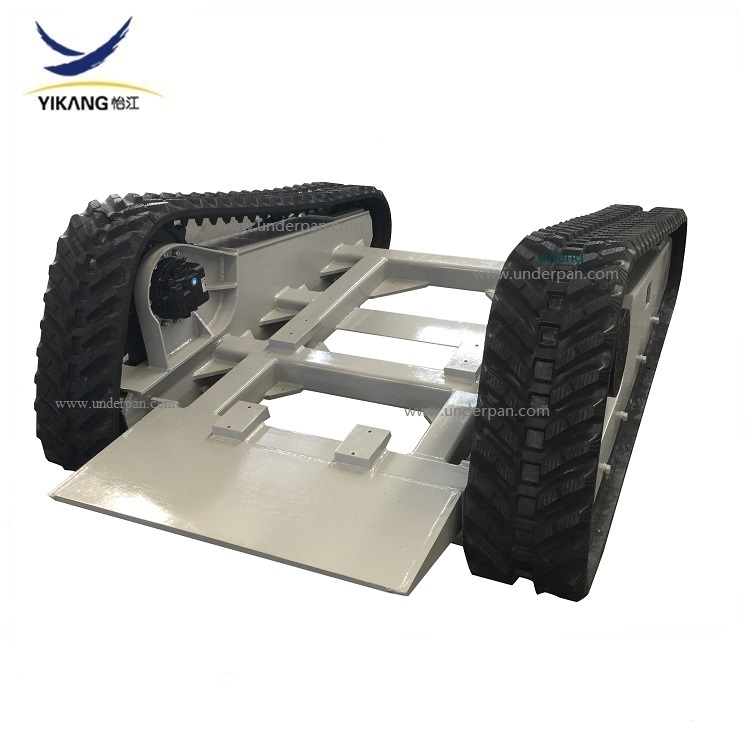
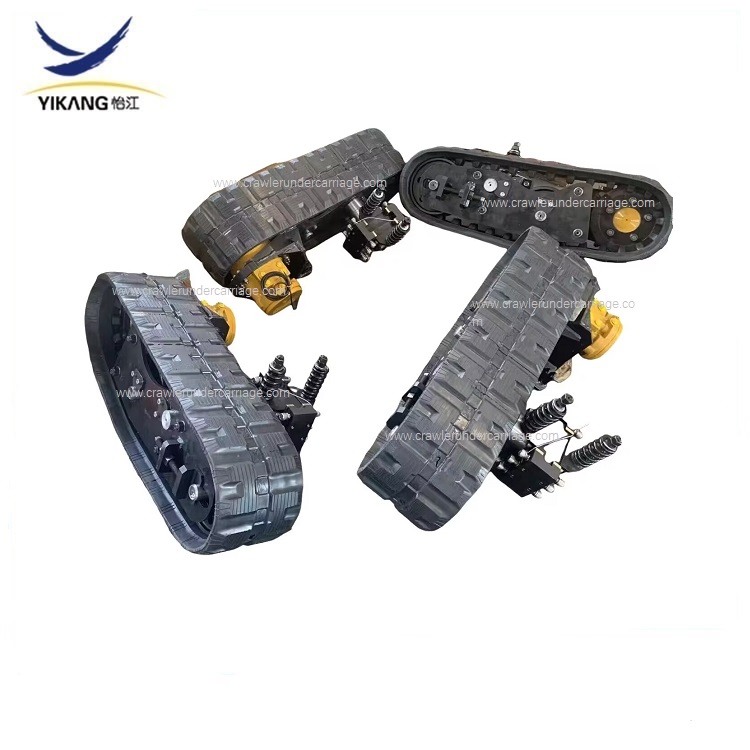
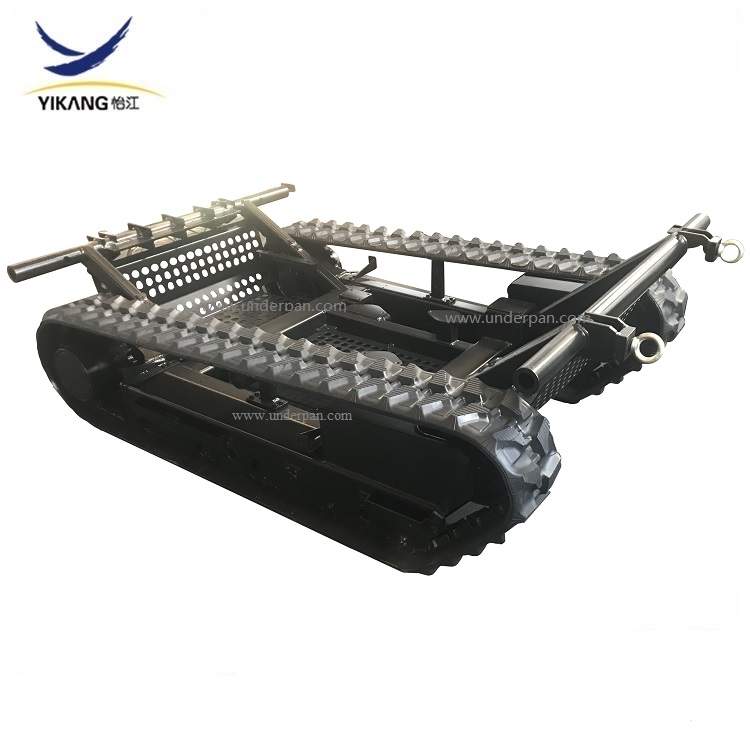
In recent years, our company has been collaborating with robot manufacturers to study and simulate the operation of fire-fighting robots and their actual needs. Gradually, we have designed several types of crawler chassis suitable for the fire-fighting industry. We are well aware that an excellent crawler-type fire-fighting robot chassis lies in finding the best balance among extreme environmental reliability, the ability to pass through complex terrains, and stability during actual operations.
⚙️ Key technical requirements: Not just "able to move"
· Extreme environmental adaptability: This is the most critical challenge. The chassis needs to have a heat-resistant insulation layer (such as aerogel) and meet IP65 or above standards for waterproofing, dustproofing, and explosion-proofing of the entire machine.
· Ability to pass through complex terrains: It needs to have the ability to make large-angle climbs and obstacles (maximum climb 45°, obstacle clearance 260mm), flexibility for in-place rotation, and be able to adapt to all terrains such as ruins and waterlogged areas.
· Power and maneuverability: An independent suspension shock absorption system (such as Christie suspension) is adopted to ensure stability; slip steering is used to achieve precise control; and it must have sufficient towing force to tow fire hoses.
⚙️ Design Focus: Transform Requirements into Reality
· Walking mechanism and suspension: Scientifically designed tracks and gear system (such as the angle between the guide wheels and the load-bearing wheels being 29° - 32°); Use of hydraulic shock absorbers for independent suspension to absorb shocks; Through tensioning mechanisms to prevent the tracks from derailing.
· Power and transmission: Precisely calculate the motor power to ensure power; Opt for synchronous belt meshing transmission to enhance stability; Can explore the design of wheel-track switching to balance speed and passability.
· Structure and protection: Adopt modular design for easy maintenance; Seal and insulate the chassis to protect internal components; Design shock-resistant structure to cope with collisions.
· Practical operation capability: Reserve quick-installation interfaces to expand equipment; Reasonably layout the center of gravity to prevent equipment from overturning; Evaluate the endurance capacity to meet the requirements for long-term operation.
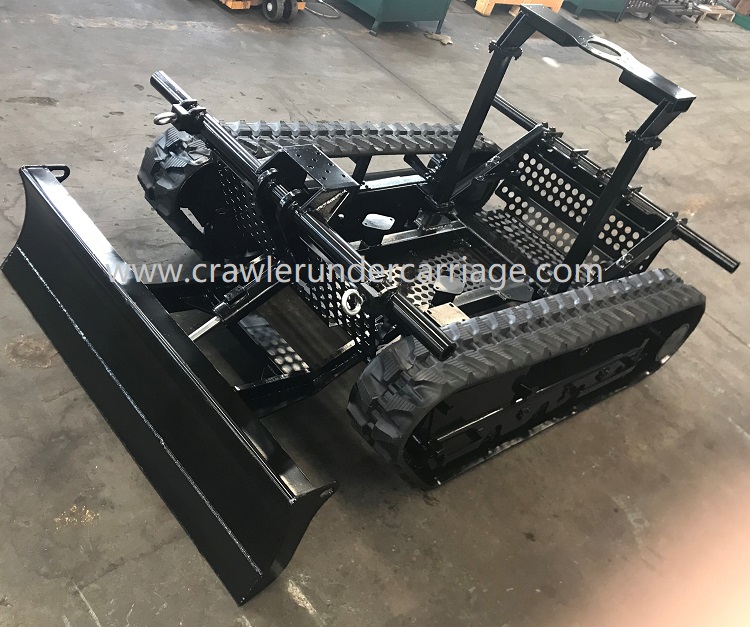
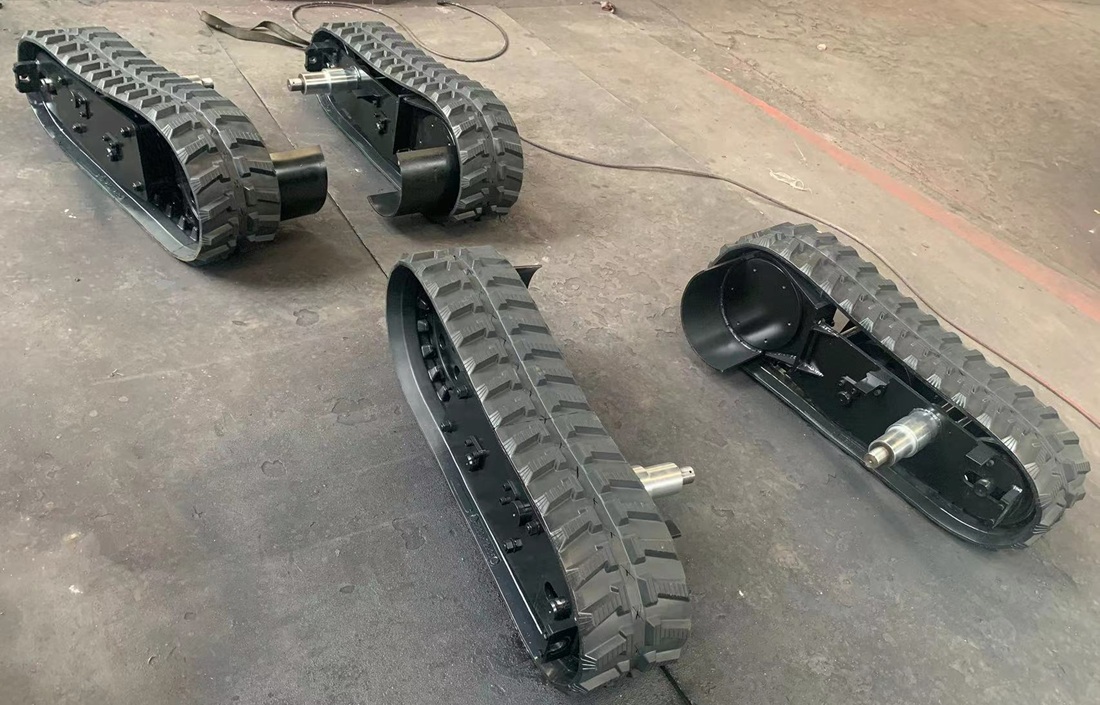
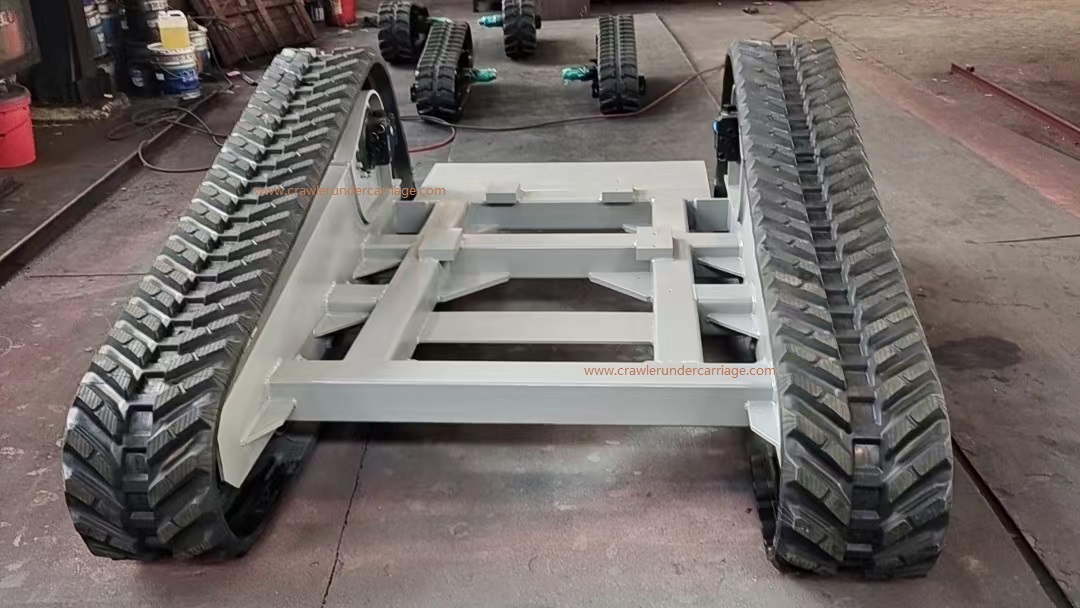
In summary, when designing the crawler chassis, a balance needs to be struck among mobility, protection, reliability and operational capabilities. The structure, size, material selection, and design of the chassis components all need to be tailored to the tasks of the robot, truly achieving the requirements of high-standard customization.