 Phone:
 E-mail:


In municipal engineering construction, machinery such as sliding formers and road milling machines have extremely high requirements for the stability of the chassis, load-bearing capacity, and the ability to maintain pavement integrity. The three-drive (three independent drive for the tracks) chassis, which uses rubber pads and steel tracks, is the core configuration for such high-end municipal engineering machinery.
Characteristics of municipal engineering machinery
●High construction accuracy requirements: When the sliding former lays curb stones, compacts concrete, or the milling machine cuts the pavement, the chassis must maintain an extremely high level of stability. Even the slightest tremor or sinking of the chassis can directly result in excessive pavement flatness.
●Complex and restricted operating environment: It often needs to operate on existing asphalt or cement roads, and cannot damage the existing pavement; at the same time, it also needs to face narrow spaces, curved road construction, and frequent relocation.
●High load and strong impact: When the milling machine cuts hard pavement, it will generate continuous strong vibrations and counterforces; the sliding former needs to bear heavy forming molds and concrete buckets, requiring the chassis to have extremely strong load-bearing and fatigue resistance capabilities.
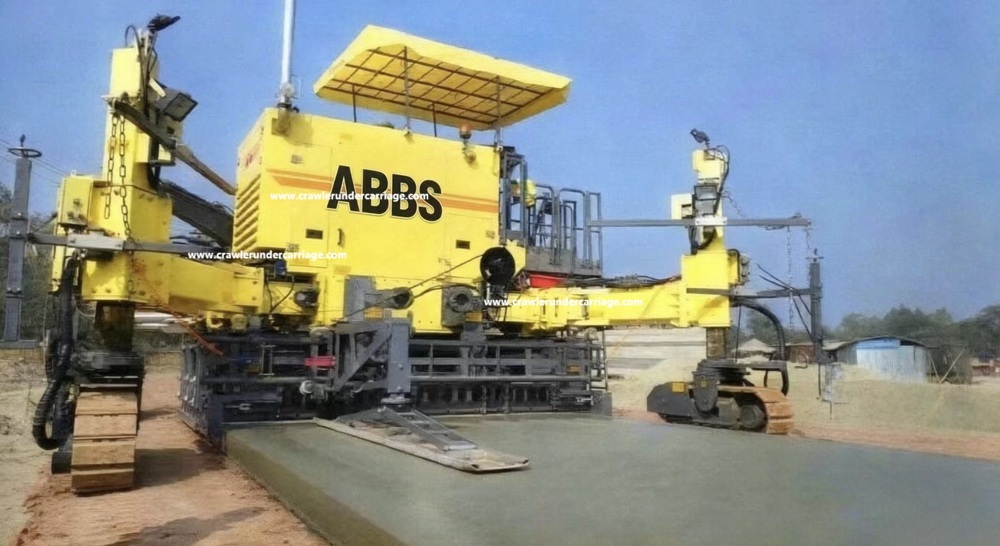
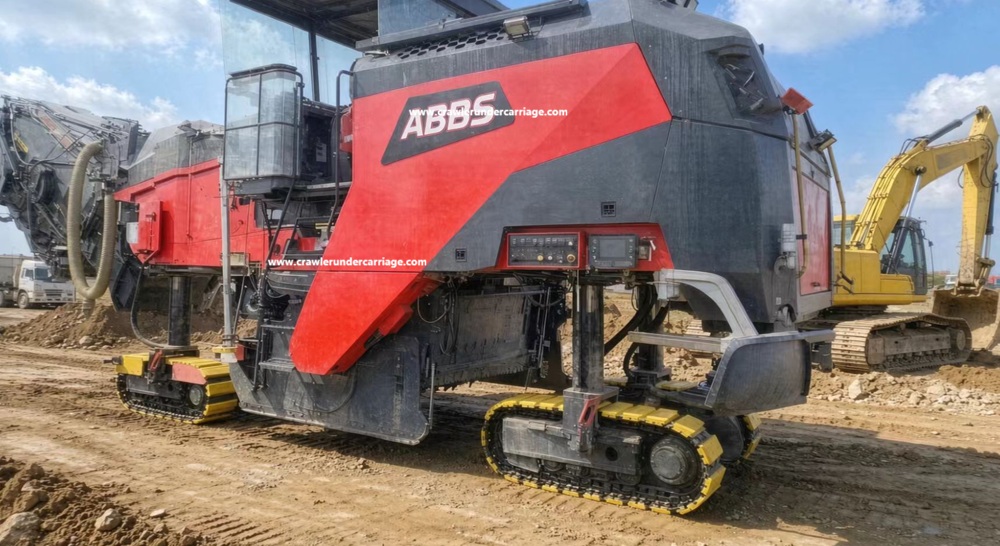
Core advantages of the "three-drive track chassis"
Compared with traditional double-track or four-track chassis, the three-drive (three legs independently driven/steering) structure brings unique engineering advantages to municipal machinery:
|
Dimension |
Outstanding performance of the three-drive chassis |
|
Geometric stability (no shaking) |
The three-point surface principle ensures that the equipment can achieve 100% grounding on any uneven road surface, and will not have the "air suspension skidding" or cross-slip phenomenon of four wheels or four tracks. |
|
Ultra-small turning radius and flexibility |
All three track legs can achieve large-angle independent steering, which can easily complete 360-degree self-steering, crabbing (sideways driving), and is very suitable for narrow alleys and intersections in municipal construction. |
|
Precise height And level adjustment |
Combined with hydraulic lifting pillars, the three drive points can independently lift, precisely controlling the level of the machine body and the construction depth (such as milling depth or sliding former forming height). |
Key requirements for such track chassis
To meet the high-intensity municipal operations, this track chassis must meet the following standards in design and manufacturing:
●Rubber pads steel track structure: The internal structure uses a high-strength steel track frame to provide load-bearing capacity and durability, and the outer layer is equipped with high-mobility, pressure-resistant rubber plates, which not only ensure load-bearing but also protect the existing pavement.
●Ultra-low speed high stability driving: It has excellent micro-motion (millimeter-level advancement speed control), and the power output is smooth and without sudden jolts in the ultra-low-speed construction state of 0.5-2 m/min.
●High reliability anti-corrosion dust-proof sealing: The support wheels, drive gears, and hydraulic motors of the chassis must have high-grade sealing and anti-corrosion capabilities.
●High-strength steel core structure: The structure is sturdy, with excellent fatigue resistance and anti-corrosion performance, suitable for harsh construction sites, and ensuring continuous high-intensity operation.
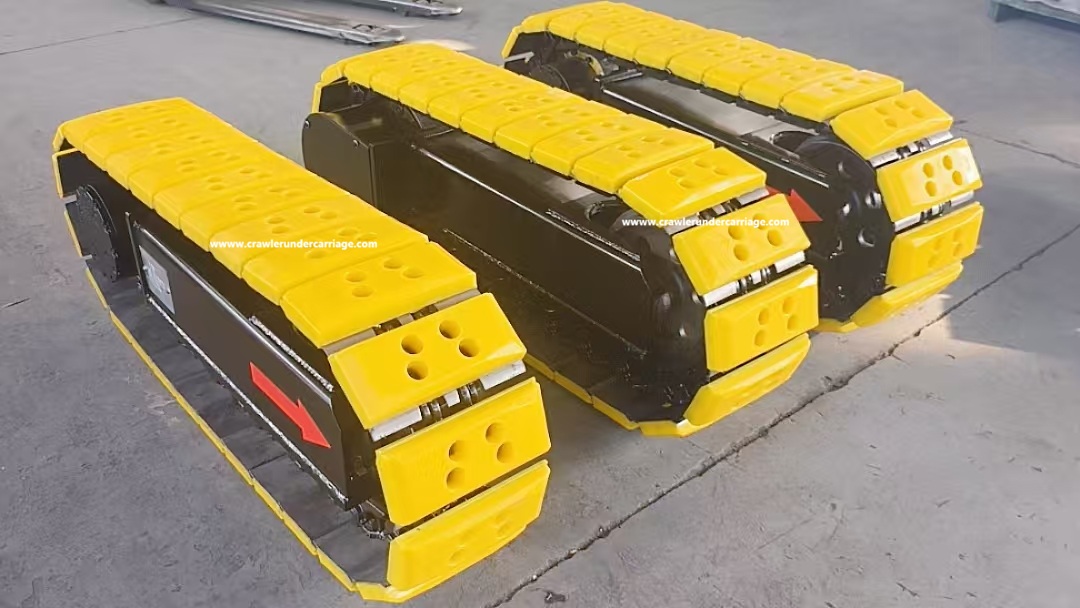
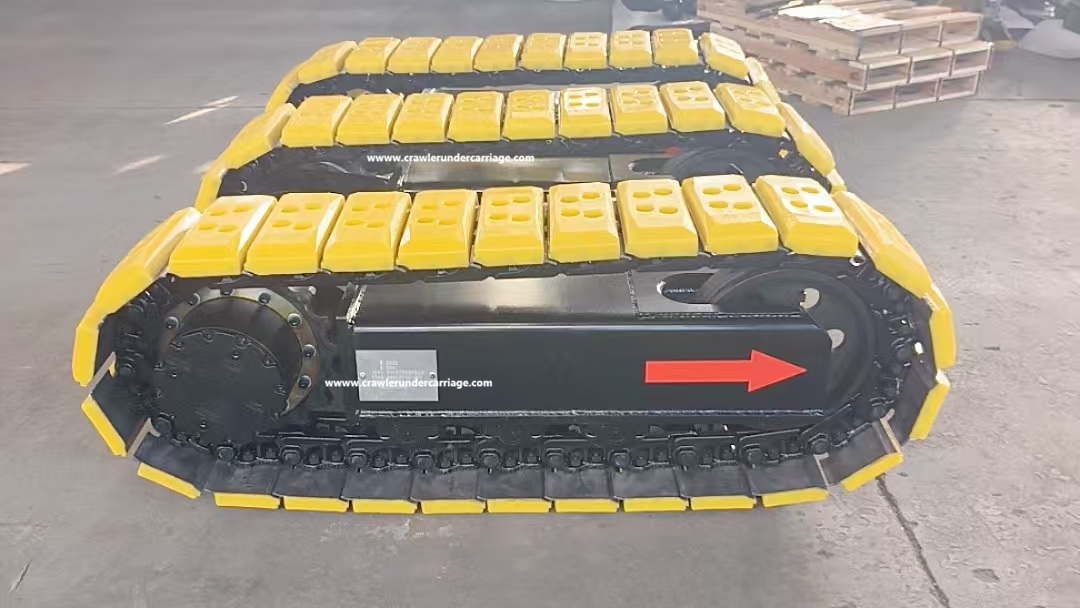
The actual convenience that can be provided for the entire machine
●Improve construction quality and one-time forming rate: With the ultimate stability of the three-point support and the grip of the rubber tracks, wave patterns and height differences during construction are significantly reduced, improving the quality of road paving or milling.
●Expand the ability to work in narrow spaces: The flexible steering and compact layout enable large machinery to work efficiently close to walls, curb stones, or in narrow urban roads.
●Reduce equipment maintenance and transportation costs: Rubber blocks can be replaced independently, and after wear, the entire track does not need to be replaced; the high-reliability chassis reduces downtime losses caused by chassis failures.